


Module 3
Two of the most-cited minds in strategy.
How do you want to work with them?
Sign up for the Strategy at the Source course today, or contact us for a bespoke custom course for your team.
The Teece × O’Reilly course, with their SudoAdvisorsWhat’s a SudoAdvisor?
The course, running
Stop the lecture. Ask your own question.
Ten modules, two business advisors, and the ability to get your questions answered live in real time — cited to the source.
Module 3/Explore vs. Exploit: The Innovation Balancing Act
Talk to CharlesLH
Illustrative AI preview
Why this is different
Most courses teach about the frameworks. This one puts you in conversation with them.
Interactive
Not a video course
A recorded lecture cannot answer you. Every module here stops when you stop it, takes the question you actually have, and answers it — in that advisor’s frameworks, cited to the work.
Applied
Your company is the case study
You don’t watch case studies and hope they transfer. You bring your market, your constraints, your plan — and pressure-test them against the frameworks in live conversation.
Continuous
One conversation, ten modules
The SudoAdvisors remember your unique scenario across the whole course — and across advisors. Raise a capability gap with Teece early on, and O’Reilly builds on it later.
Authorized SudoAdvisor


How the SudoAdvisors were built
Built with the advisors themselves.
Direct video sessions captured their reasoning, voice and likeness; their own work grounds the authorized SudoAdvisors.
- 01
Captured directly
Video sessions recorded how each advisor reasons and explains.
- 02
Grounded in their work
Their books, papers and teaching material shape every answer.
- 03
Reviewed and authorized
Each advisor tested and signed off their own SudoAdvisor — what you talk to is our AI.

Your instructors
Two advisors who wrote the frameworks.
Between them they defined how modern firms adapt and innovate without losing what made them great. In this course you get to ask questions to both using your own professional use cases — and they remember what you asked.
David Teece
Professor of the Graduate School · Berkeley Haas
David Teece is an economist and an authority on industrial organization, technological change, innovation, competition policy, and intellectual property. He has written more than 200 books and articles. His dynamic capabilities work asks how firms sense change, seize opportunities, and transform before an advantage disappears.
40+
Years at Berkeley Haas
200+
Books and articles
9
Honorary doctorates
Charles O’Reilly
Frank E. Buck Professor of Management · Stanford GSB
Charles O’Reilly studies leadership, culture, organizational innovation, and change. His work with Michael Tushman on organizational ambidexterity explains how firms can run today’s business while building what comes next. He has published more than 100 papers and six books, and has taught at Stanford since 1993.
30+
Years at Stanford
100+
Papers published
6
Books
From signal to strategy.
Sense change, make the bet, design for both horizons — then turn two frameworks into a roadmap for your company.
Chat with a SudoAdvisorCharles · DavidStart chat
Your pathFour capabilities
Module 4 · Prof. David TeeceSense the shiftDone
Module 6 · Prof. David TeeceChoose the opportunityDone
Module 3 · Prof. Charles O’ReillyBuild for both horizonsResume
Module 10 · Prof. David TeeceLead the transformationUp next
Your roadmapModule 10
Two frameworks become one plan for your company.
- Capability map
- Business-model choices
- Transformation roadmap
62% · Teece × O’ReillyStart building
How the course runs.
Each module moves from a concise idea to a live working session. Ask questions by chat, voice or video.

Working sessionModule 4 · Teece
01 · Learn

Module 4
Sensing the Environment & Making Bold BetsPaused02 · Interrupt
YouHow do we tell a weak signal from noise in our market?
David · SudoAdvisor Slides · p.14
Start where your current customers cannot see yet — then price what being wrong early would cost against arriving late.
Ask about this moment — chat, voice, or video
Your roadmap2 notes
03 · Apply
The weak-signal testKept just now · Module 4
Bold-bet criteriaEarlier this module
Context carries into every next conversation.
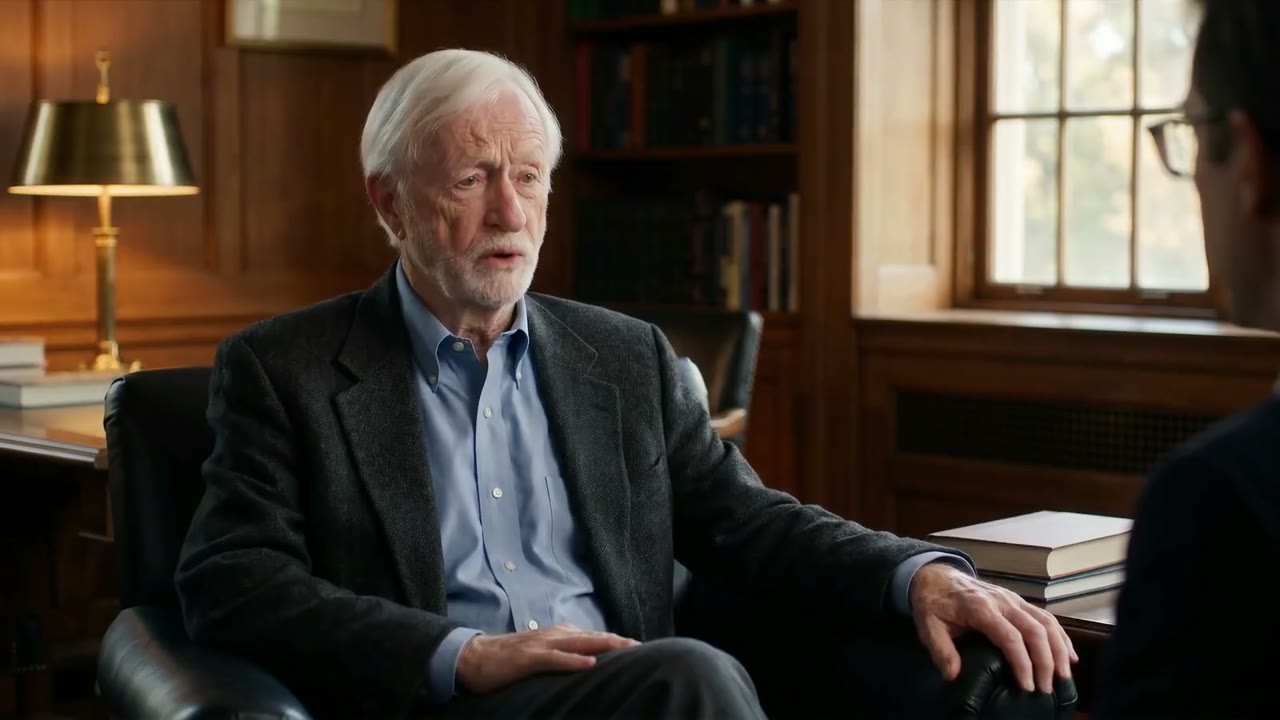
Inside the course
See the advisors in action.
Learn with the authorized SudoAdvisors of Charles O’Reilly and David Teece.
Illustrative AI preview
Curriculum · 10 modules
Ten modules. One continuous conversation.
The advisors alternate — O’Reilly on why change is hard and how to organize for it, Teece on sensing, seizing, and transforming. Each module is roughly thirty minutes, self-paced, with both SudoAdvisors on call throughout. Open any module to see what it works through. Don’t have time to finish a module? Pause and pick up where you left off.
01Why Change Is So Hard: The Success SyndromeWhy great companies stall — and how success itself plants the seeds.O’Reilly
Recognize when the routines behind yesterday’s success have become tomorrow’s constraint.
- Success reinforces the choices, structures, and metrics that produced it.
- Strong execution can make weak signals easier to dismiss.
- Leaders need permission and evidence to challenge the dominant logic.
Worked on your company
Which strength in your organization is most likely to become a source of inertia?
Take it with the SudoAdvisors02Dynamic Capabilities: Sense, Seize, TransformThe master framework: sense change, seize it, transform to match.Teece
Use sensing, seizing, and transforming as a practical sequence for strategic renewal.
- Sensing turns weak signals into a shared view of change.
- Seizing converts an opportunity into a committed business-model choice.
- Transforming realigns assets, incentives, and routines around that choice.
Worked on your company
Where is your organization strongest today: sensing, seizing, or transforming?
Take it with the SudoAdvisors03Explore vs. Exploit: The Innovation Balancing ActRunning today’s core business while making tomorrow’s bets.O’Reilly
Design an operating system that can improve today’s business while creating tomorrow’s.
- Exploit units optimize known models; explore units reduce uncertainty.
- The two modes require different measures, talent, and review rhythms.
- Senior leadership must hold the tension and create a shared strategic intent.
Worked on your company
What promising initiative are you evaluating with the metrics of the core business?
Take it with the SudoAdvisors04Sensing the Environment & Making Bold BetsReading weak signals early — and committing before certainty arrives.Teece
Separate durable signals from noise and translate them into a small number of bold bets.
- Start with changes in customer behavior, technology, and regulation.
- Treat assumptions as hypotheses that can be tested.
- Make fewer bets, with explicit learning milestones and exit conditions.
Worked on your company
Which external signal would matter most if it became ten times stronger?
Take it with the SudoAdvisors05Aligning the Organization: The Congruence ModelDiagnosing why strategy dies between the org chart and reality.O’Reilly
Diagnose whether strategy, people, work, and formal organization reinforce one another.
- Performance problems often sit between parts of the system.
- A new strategy fails when roles and rewards still serve the old one.
- Alignment is an ongoing leadership practice, not a one-off reorganization.
Worked on your company
Which two parts of your operating model are currently pulling in opposite directions?
Take it with the SudoAdvisors06Seizing Opportunities & Business Model DesignTurning an opportunity into a business model that captures the value.Teece
Turn a strategic opportunity into a coherent business model and an executable commitment.
- A business model joins value creation, delivery, and capture.
- Commitment should follow evidence, not enthusiasm alone.
- Resources, governance, and leadership attention make a choice real.
Worked on your company
What must be true for your most important opportunity to become a viable business?
Take it with the SudoAdvisors07The Corporate Explorer: Ideate, Incubate, ScaleA repeatable path from idea to incubation to scaled business.O’Reilly
Build a repeatable path from idea to incubation to scaled business.
- Ideation creates options; incubation proves a model; scaling builds a business.
- Each stage needs a different question and investment logic.
- Premature scaling can destroy a promising idea before it is understood.
Worked on your company
Is your priority initiative genuinely ready to scale, or does it still need incubation?
Take it with the SudoAdvisors08Reconfiguring the Enterprise & Asset OrchestrationRe-shaping assets, structures, and partnerships as strategy shifts.Teece
Reconfigure assets and partnerships fast enough to keep strategy and execution connected.
- Transformation changes how assets are combined, not just who owns them.
- Orchestration extends beyond the firm into partners and ecosystems.
- Legacy assets can become leverage when they are recombined around a new model.
Worked on your company
Which existing asset could become more valuable in a different configuration?
Take it with the SudoAdvisors09Leading Change: Narrative, Politics, and CultureThe story-telling and politics of making change actually stick.O’Reilly
Lead change through a credible narrative, a realistic coalition, and visible choices.
- A narrative connects external urgency to a believable future.
- Politics is the work of building enough support to move.
- Culture changes when repeated leadership choices change what succeeds.
Worked on your company
Who needs to see themselves in your transformation story before they will support it?
Take it with the SudoAdvisors10The Integrated Framework & Your Transformation RoadmapBoth frameworks integrated into your own transformation roadmap.Teece
Both frameworks integrated into your own transformation roadmap.
- Both frameworks integrated into your own transformation roadmap.
Worked on your company
Score your organization 1–10 on all eight dimensions — Sensing, Seizing, Transforming, People, Structure, Metrics, Incentives, Culture — rating each element's fit with the critical tasks your strategy demands. For each score, name the routine or decision that justifies the number — evidence, not aspiration. Which single dimension is your lowest?
Take it with the SudoAdvisorsPricing
One price. Everything in it.
- All ten modules, plus optional deep divesWatch then discuss, or interact slide-by-slide — your call, every module.
- Live voice Q&A with both SudoAdvisorsPause any lecture to ask questions. Both SudoAdvisors share memory, and your knowledge graph builds over time.
- 12 months of Pro membershipKeep working your strategy questions long after the last module. After the first year, Pro is optional.
- Certificate of CompletionNon-credit, non-degree — publicly verifiable, printable, and framable.
- Two Founders’ Edition digital collectiblesOne per advisor, granted with your purchase. A commemorative keepsake, not an investment.
- On your desk and in your pocketTake any module by voice on your phone — the course travels with you.
Strategy at the SourceCourseNow enrolling
With Prof. David Teece & Prof. Charles O’Reilly
$1,799.95one-timeno subscription
Buy it and the whole course opens — all ten modules, both SudoAdvisors, straight away. Take it at whatever pace suits you.
Get the course- One-time
- 12 months of Pro membership included
Non-credit, non-degree · taught by authorized SudoAdvisors
We offer bespoke programmes for your team. Ask us about a custom course.
Questions
Straight answers.
Am I actually talking to Professors Teece and O’Reilly?
No — and we’re upfront about that. You’re conversing with SudoAdvisors built from each professor’s own body of work, with their authorization. Every conversation is delivered by our AI. What you get is their frameworks, applied to your company, on your schedule.
Is this a university course or degree program?
No. This is an independent executive course. It is non-credit and non-degree, and it is not affiliated with, sponsored by, or accredited by any university — the professors’ academic titles are biographical.
How does the certificate work?
Finish all ten modules to earn your Certificate of Completion (non-credit, non-degree). It’s anchored to our credential network for public verification, comes as a printable PDF, and can be upgraded to a framed print delivered to your door.
What are the Founders’ Edition digital collectibles?
Two digital collectibles, one per advisor, granted the moment you buy and recorded to your account. Technically each is an NFT we hold for you automatically: no crypto wallet to set up, nothing to manage. They’re a commemorative keepsake, not an investment, and we make no claims about monetary value.
How much time does it take?
Core modules run about 30 minutes each, and the whole course is self-paced, with deep dives there when you want to go further. Your SudoAdvisors stay with you after the last module, so there’s no clock to beat.
What happens after the course?
You keep both SudoAdvisors, the AI advisors built from Professors Teece and O’Reilly’s work and delivered by our AI. Time with them runs on credits, and when your credits run out you can add more any time. Your purchase includes 12 months of Pro membership. After that, Pro is optional at $999.95 a year.
Can I get a refund?
Purchases are covered by our Terms of Service. If something is not working for you, email programs@dynamicexperts.com.